

Electrum's tattoo culture blog
Electrum's Tattoo Culture Blog

The Business Of Tattooing - Try Doing ANYTHING Else Before Complaining About This Slow Season
Tattooing gets slow. It’s not personal. It’s cycles, spending patterns, weather patterns, and sometimes the universe is just a little hater. But here’s the part no one likes hearing: sitting in your shop mumbling about how “it’s dead” won’t magically summon clients. 1. Gather Client Info (You Know… Like A Business) Tattoo artists love saying “I don’t know how to get clients.” Baby, you had them. They literally sat in your chair. You just never… collected their info. What you need:• Name• Email• Phone• Birthday• Interests (tiny multiple-choice works)• Past tattoos done by you• What they want next What to do with it:• Email them a quarterly newsletter (offers, new designs, studio updates)• A “birthday treat” flash discount• A “Hey, it’s been 6 months, let’s touch up/finish that piece” message Ways to collect this without feeling like a mall kiosk:• Add an iPad at checkout with a form• QR code on your front desk• Link in your bio for “studio updates + first-to-know drops”• Run a “Giveaway only for my mailing list” every few months People want to be contacted when it’s relevant. Just don’t be weird about it. 2. Fix Your Bio, Link, Highlights, and Grid Clarity beats aesthetics. Bio checklist:• Your city• Your style• Your booking link• A reason to book you Highlights:• Healed work• Aftercare• Available flash• FAQ• Prices/start rates Grid:Mix of:• Tattoo photos• Videos• Behind the scenes• Your face• Healed pieces• Flash• Offers People can’t book you if they don’t understand you. 3. Make Something. Anything. Slow season is creation season. • Draw new flash• Design a print• Build a healed gallery• Reorganize your booking process• Shoot a “day in the life”• Try a new cartridge group (Fire will make you feel like a god, by the way)• Set up retail in your studio (aftercare, prints, merch)• Test new workflows (Electrum Cleanse instead of harsh soaps) Motion creates momentum.Momentum creates bookings. 4. Email People Back Like It's 2019 You know what clients complain about most?Artists not replying. Set aside 30 minutes a day.Answer your emails.Follow up with old inquiries.Send price ranges, next steps, and booking instructions. This isn’t rocket science.It’s basic professional behaviour. 5. Build Community Instead of Waiting for One • Collaborate with a piercer• Make a “flash Friday” event• Host a meet-and-draw night• Ask other local businesses if you can leave cards or stickers• Donate a gift certificate to a fundraiser• Ask clients to send healed photos• Repost every healed photo in a highlight called “Healed” The artists who stay busy are the ones who stay visible. 6. Make a Website (Really. 2026 is coming. Be serious.)** You do not need a masterpiece. You need something functional. Bare-minimum pages:• Portfolio• About you• Booking form• Prices or starting rates• Aftercare• Shop location + hours• FAQ Easy tools that won’t fry your brain:• Wix• Squarespace• Shopify (if you want to sell prints or merch too) Your Instagram is not your website.Your booking link is not your portfolio.Your clients are confused, even if they’re too polite to say it. 7. Make Clear Offers (‘I have flash’ tells me nothing)** Artists keep posting the same three phrases:• “Books open”• “I have flash”• “DM to book” It’s vague. It’s giving: “please fail me harder.” Clear, irresistible offers look like:• “Three palm-sized floral designs available this month, $250 each, colour or black.”• “One last-minute spot tomorrow 3pm. Pick from these designs.”• “$100 off multi-session projects booked before Sunday.”• “These four flash pieces are pre-sized, pre-priced, and ready to go.” Tell people what you want them to buy.Humans love being explicitly guided. 8. DM People (And Relax, This Isn’t Begging) Don’t send “hey do you wanna book?” like some desperate Craigslist ad. This is how you do it: Human messages that actually work:• “Hey, I saw you got your first tattoo recently. How’d it heal?”• “You liked my post about lettering yesterday. Are you planning something?”• “Saw your story about your birthday. If you ever want a birthday tattoo, I’d love to design something.”• “Thanks for following. If you ever need inspo, I’ve got tons saved.” You’re not asking for a booking.You’re building rapport. People book tattoos with artists who feel like people, not robots holding machines. 9. Post Useful Stuff (Not Just Finished Tattoos) When it’s slow, educate. Teach. Share knowledge. Post things clients save because it’s useful. Ideas grounded in actual audience behaviour:• “Tattoo placement guide for first timers”• “What to wear for your tattoo appointment”• “How to choose reference photos”• “Tattoo pain chart”• “Healing week by week”• “Things I wish clients knew before their first big piece”• “Why good tattoos take time” If you’re constantly delivering value, people don’t forget you. 10. Talk on Camera (Quit Overthinking Your Face) Video performs better than photos. This isn’t a vibe; it’s every platform’s documented behaviour. But artists avoid video like it’s a hex. Stuff you can talk about without planning a TED Talk:• “Here’s a mistake beginners make in tattooing…”• “Designs I wish clients would ask for”• “Why artists charge what they charge”• “How to prep your skin before a tattoo”• “How lines heal vs how lines look day one”• “One thing I won’t tattoo anymore and why”• Time-lapse of a stencil• Your set-up (bonus points if you show Fire Cartridges, duh) The camera wants your voice, not your perfection. Slow seasons are inevitable.What you do during them is optional. This industry rewards the artists who act, build, talk, show up, and try.Not the ones sighing into their coffee. Now go do literally anything except complain. That’s the whole newsletter.
Read more
The Business of Tattooing - Tattoo Less, Earn More: 3 Things Six-Figure Tattooers Do Differently
Let’s get one thing straight - just being good at tattooing isn’t enough anymore. The artists pulling in six figures aren’t necessarily the most talented, most followed, or most booked-out. But they are running their business like a business. They know their numbers. They don’t live in their DMs. And they’re making content that connects and converts.

THE 72-HOUR CANCELLATION WAVE - How to Protect Yourself Legally, Financially & Emotionally When Clients Bail at the Worst Possible Time.
If you’re losing money to last-minute cancellations… you’re not alone. 2024–2025 brought the biggest spike in 72-hour cancellations the tattoo industry has ever seen. Weather.Inflation.Childcare shortages.Job instability.Mental health waves.Seasonal depression. It’s not personal — but it IS a financial nightmare. Here’s what most artists don’t know:The majority of cancellations happen between 72–24 hours before the appointment.NOT the same day.NOT the 48-hour mark.72 hours. And unless your policy is structured to protect you in that exact window… you’re bleeding income. Let’s fix that. 1. The Industry Stats Every Artist Should Know Recent data across the US, Canada, UK & EU shows: • 72-hour cancellations are up 18–30% Across all markets and specialties. • Sunday–Tuesday are the danger days People get anxious before the week starts and bail. • Larger pieces cancel at higher rates Fear of cost + fear of commitment = bye. • Evening appointments cancel more than mornings Decision fatigue plays a role. • Most last-minute cancellations can be prevented Clients often panic. Scripts + reminders stop it. 2. How to Prevent 72-Hour Cancellations (Scripts Included) A. The Confirmation Script That Actually Works Send 3–5 days before the tattoo: “Hey! Just confirming everything for your tattoo on [DAY]. If you have ANY questions, nerves, or need to check details — I’ve got you. Here’s what to bring + what to expect. See you soon!” Clients get nervous.Reassurance reduces bailouts. B. The Deposit Reminder Script (Not threatening. Just grounding.) “Your deposit is applied toward your final total, and the appointment is fully locked in. If you need anything before then (prep questions, design nerves, etc.) just message me!” This reduces flakey panic-confirmation spirals. C. The “No-Reschedule Roulette” Script For clients testing boundaries: “I can move your appointment once if needed, but inside 72 hours my cancellation policy kicks in because I can’t refill the spot on short notice. Let me know what works best for you.” Clear. Calm. Firm. 3. Legally-Safe Cancellation Fee Structures Every policy must include: ✔ Clear timeframe “Inside 72 hours…” ✔ Clear consequence “Deposit is forfeited” or “50% fee due” ✔ Delivery method Clients must see it BEFORE booking. ✔ Neutral language Policy should sound procedural, not emotional. ✔ Digital agreement Screenshots, booking forms, emailed confirmations = proof. Recommended Policy Templates Option 1 — Deposit Forfeit Model Inside 72 hours → deposit forfeitedSimple. Enforceable. Widely used. Option 2 — 50% Cancellation Fee For artists doing large pieces. Inside 72 hours → 50% of expected session cost due. Works best for:• Day sessions• Large-scale projects• Returning clients Option 3 — Hybrid Model Deposit is forfeit+a smaller additional fee for high-volume days (Fri-Sun) This balances fairness + revenue protection. 4. Conflict-Free Language to Enforce Your Policy This is the “gentle spine” approach: soft tone, solid boundary. Template 1: They cancel inside 72 hours “Thanks for letting me know. Since we’re inside the 72-hour window, my cancellation policy applies and the deposit is forfeited. If you’d like to rebook, I can send available dates.” Template 2: They want a refund “I totally understand where you’re coming from. My booking policy is the same for every client so it stays fair and consistent. Inside 72 hours, deposits are non-refundable because I can't refill the time slot on short notice.” Template 3: They try to push back “I hear you — and I appreciate you being upfront. My policies are in place to protect my time, prep work, and income. I’m happy to help you find a new date, but the cancellation fee still applies.” 5. The Gift Card Salvage Strategy (Turns Cancellations Into Sales) If someone cancels inside 72 hours and is mad about losing money?Offer this: “If you prefer, I can convert your deposit into a gift card for the studio. It’s non-refundable but it never expires and can be used for future tattoos.” You keep the money.They feel validated.Everyone wins. The 72-hour cancellation wave is real — and it’s not going away.But it also doesn’t have to drain your bank account, energy, or confidence. Policies protect you.Scripts guide clients.Systems keep you sane. Your time matters.Your boundaries matter.Your financial stability matters. This is how you protect all three.

The Business of Tattooing - Why You’re Not Booking — and How to Fix It Fast
So Your Books Aren’t Full - Now What?Here’s the truth: most tattoo artists aren’t struggling because of their art.They’re struggling because their systems, communication, and visibility are letting them down. If you’re feeling burnt out, under-booked, or just over chasing clients - here are 4 things you can start doing today to fix that.

The Business of Tattooing - 4 tips for Dealing with Difficult Consultations
As a tattoo artist, consultations can either pave the way to amazing artwork or lead to frustrating dead ends. Difficult consultations often arise due to mismatched expectations, communication barriers, or clients unsure of what they truly want. Here's how you can expertly navigate these tricky interactions, ensuring your client leaves confident and your bookings stay full.

The Silent Killer of Bookings: Website + Bio Mistakes
If your bookings feel slower… your BIO might be the problem. Most tattoo artists think clients choose them based on skill. Nope. Clients choose based on clarity and trust, and your bio + website are the FIRST impression that creates both. In 2024–2025, attention spans are microscopic.If your bio doesn’t explain who you are, where you are, what you do, and how to book, clients bounce instantly. Here’s the hard truth: **Most artists unintentionally sabotage their bookings with tiny online mistakes. The good news? They’re all fixable in under an hour.** Let’s break down what’s actually hurting you — and how to run a high-converting online presence like a pro. 1. The 6 Bio Mistakes That Kill Trust These are industry-wide issues, and most artists are guilty of at least 3. ❌ Mistake 1 — No location in your bio Clients leave immediately if they can’t tell where you’re based. ❌ Mistake 2 — Style is vague or missing “Tattoo Artist” tells us nothing.Say the STYLE you specialize in. ❌ Mistake 3 — No CTA (Call to Action) A bio should lead to ONE clear step:“Book here.”“Submit a request.”“Flash drops weekly.” ❌ Mistake 4 — Portfolio is cluttered Old work, inconsistent work, different styles → lowers trust. ❌ Mistake 5 — No face, no vibe People book ARTISTS, not just tattoos.A photo of you builds huge trust. ❌ Mistake 6 — Link isn’t optimized for mobile 80% of potential clients click your link from a phone.If your link tree is messy or the form takes too long, they bail. 2. Website Issues That Ruin Conversions ❌ No “start here” button People panic when they don’t know where to go. ❌ Policies are hidden (or intimidating) Clients need clarity, not fear. ❌ Booking form takes too long If it takes more than 60–90 seconds → they leave. ❌ Prices aren’t explained clearly You don’t need to list your full prices.Just explain how pricing works. ❌ No studio environment photos Clean, safe studios convert better than the best portfolios. 3. The 12-Point Portfolio Conversion Audit (This is the part that artists screenshot, save, and share.) Run this checklist TODAY: Bio Location visible in first line Specializes in 1–2 styles Call-to-action included Link goes directly to booking Instagram Top 12 posts show your best style only Pinned posts: portfolio, flash, healed work No random selfie content cluttering Website Clear “Start Here” section Policies written in friendly tone Prices explained simply Fast, mobile-optimized form Studio photos included for trust Do these twelve things, and you’ll see an immediate change in your booking quality AND volume. 4. The Psychology Behind Fixing Your Bio Clients don’t book based on logic.They book based on certainty. Your portfolio shows talent.Your bio shows professionalism. When both are aligned?You become the safest, easiest yes. 5. Copy/Paste Bio Templates Blackwork Artist Example “Blackwork tattooer in Hamilton, ON ✖Floral • occult • femme-focused piecesBooking + flash → [link]” Fine Line Artist Example “Fine line + micro realism • TorontoHealed work + availability ↓Book here: [link]” Watercolor Artist Example “Watercolor + illustrative tattoos 🎨Studio in downtown MontrealFlash drops weekly. Book at link.” These convert. Consistently. 6. Final Reminder You can be the best artist in your city…but if your bio confuses people, they’ll never make it into your chair. Your art matters.Your presentation matters just as much. Fix your digital front door.Your bookings will follow.

Clients Are Spending Differently This Year — Here’s How to Pivot
If your books feel slower, your DMs feel quieter, or clients seem hesitant to commit… you’re not imagining it. North America, the UK, and much of Europe are experiencing a tattoo recession — not because tattoos are less popular, but because consumer spending is changing. People still want tattoos.They’re just spending money differently.

The Business of Tattooing - Micro-Trends, Macro-Money: How Styles Like “Ignorant Tattoos,” “Fine-Line,” or “Sticker Sleeves” Affect Long-Term Sustainability
Micro-trends can be incredible for visibility and fast cash, but they’re not a business model by themselves. The smartest artists use trends as leverage: they attract new clients, grow social reach, and then transition those clients into bigger, more sustainable work.

The Business of Tattooing - Creating a Tattoo Studio Culture That Retains Top Talent
As a seasoned tattoo artist and studio owner, I've seen firsthand how the right culture transforms a tattoo studio from merely a workplace into a thriving creative community. Attracting skilled artists is one thing; retaining them long-term is another challenge altogether. Here's how you can build an environment that motivates your artists to stay and grow alongside your business.

The Business of Tattooing - How to price your tattoos without undervaluing your art and time
As a tattoo artist, pricing your work can be one of the most challenging aspects of the job. Setting rates that reflect your skill, experience, and time is essential—not just for your income but for establishing your value in the industry. Undervaluing your art can lead to burnout, frustration, and financial instability. Here’s how to price your tattoos confidently and fairly without selling yourself short.

The Business of Tattooing - Why “Exposure” Isn’t Payment, But Visibility Can Be Currency
Tattoo artists have been hearing it forever: “We can’t pay you, but think of the exposure.” Most of us know that’s BS. You can’t pay rent with exposure, and you can’t buy ink with Instagram likes. But here’s the twist: in the TikTok + IG era, visibility can translate into real bookings—if you treat it strategically. The difference between empty “exposure” and valuable visibility is how you leverage it.

The Business of Tattooing - Digital Portfolios and SEO: Getting Found Online
In today’s digital-first world, having an eye-catching online portfolio isn’t just a nice-to-have—it’s essential for tattoo artists who want to showcase their work and attract new clients. But simply posting your art online isn’t enough. To really get noticed, you need to understand and implement Search Engine Optimization (SEO) strategies.
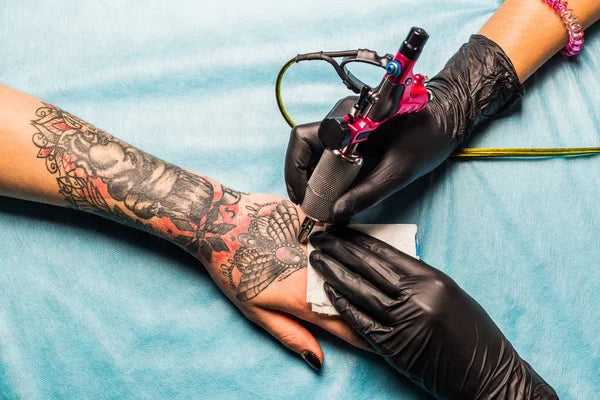
The Business of Tattooing - Booked Out for 6 Months”: The Hidden Financial & Emotional Risks Behind the Flex
In today’s tattoo industry, being “booked out for months” is the ultimate flex. It signals demand, status, and credibility. But behind the humblebrag? There are hidden costs—financial, emotional, and cultural—that most artists don’t talk about.
About the Electrum Blog:
From tattooing's past to the future, the team of artists and shop owners at Electrum share their perspectives and knowledge on everything tattoo industry.
A few of the things you'll find in our blog posts:
- Business and Industry Insights: advice and ideas for tattoo business growth, current industry trends and strategies for attracting clients, whilst managing a full schedule.
- Compliance and Safety: Information regarding regulatory compliance and our mission to produce safe, compliant inks.
- Product Information: Details about our specific products.
- Interviews and Events: Discussions and recaps from industry events.